
 Keith Jacobs
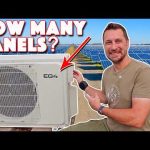
Planning to run an EG4 dual-zone mini split from solar? Don’t guess — size the panels, inverter and battery the smart way. Below I walk through realistic panel counts, inverter/battery guidance, and DIY tips for a reliable off-grid or hybrid setup using EG4 equipment and 385W–415W solar modules.
Solar Panels Needed to Run an EG4 Dual-Zone Mini Split
How many panels? The quick math
Start by converting cooling capacity to electrical load. A dual-zone EG4 setup with two 12k BTU heads (24k BTU total) produces roughly 7,000+ BTU/hr of cooling per kW of heat pump output; with modern COPs (coefficient of performance) around 3–4, the electrical draw while running is commonly in the ~2.0–2.5 kW range. That means continuous power use of about 2 kW, and energy of roughly 16–20 kWh for 8 hours of daytime operation. Using common solar panels from the video (385W or 415W), you’ll need roughly 7–10 panels under typical 4–6 peak sun hours to cover a full day of heavy cooling: fewer panels in high-sun regions, more in cloudy, low-sun locations. Put simply — expect a ballpark of 6–12 panels depending on panel wattage, sun hours, and how many hours you plan to run the system.
Inverter and battery sizing — don’t skimp
Panels alone don’t make a reliable system. Match the inverter to the mini split’s continuous and startup loads: choose an inverter with enough continuous output for the running amps (2–3 kW) and a surge capacity to handle compressor spin-up. If you’re using EG4 off-grid gear (EG4 12000XP, FlexBoss or similar), size for at least the continuous draw plus headroom — many installers recommend a 3–6 kW continuous inverter with a healthy surge rating. For energy storage, plan for a usable battery bank near the daily kWh estimate — a 14–16 kWh usable battery might cover a full day of heavy cooling but will be tight; 20+ kWh gives much more cushion for cloudy stretches or night-time use. Always check the EG4 hybrid mini split spec sheet and inverter PV input limits when designing the PV array and battery bank.
Practical DIY tips and real-world considerations
Use pre-charged EG4 line sets, proper comm cables and a licensed electrician/HVAC tech for final refrigerant or electrical connections if you aren’t certified. Optimize panel count by using higher-watt modules (415W bi-facial panels reduce panel count) and siting panels for maximum peak sun hours. Don’t forget balance-of-system items: proper inverter PV disconnects, MPPT input, correctly sized DC cabling, and battery cooling/heating if you use indoor wall-mount batteries. Finally, size conservatively: oversized PV and battery cut generator runtime and keep your mini split running smoothly when clouds roll in.


GIPHY App Key not set. Please check settings